-
Public Info posted an update 1 year, 3 months ago
There is a fundamental connection and relationship between Bitcoin, cryptocurrencies, and the concepts of “clearing and settlement,” although the mechanisms differ significantly from traditional finance.
What are Clearing and Settlement?
In traditional finance:
* Clearing: This is the process that happens after a trade is executed but before settlement. It involves:
* Verification: Double-checking the terms of the deal, ensuring both parties agree.
* Reconciliation: Exchanging payment details between banks and reconciling funds.
* Risk Management: Calculating obligations and exposures, often involving a clearinghouse that acts as an intermediary (buyer to every seller, seller to every buyer) to manage counterparty risk. This process can involve “netting” trades, where multiple transactions between parties are offset to reduce the final amount of money or securities that needs to be transferred.
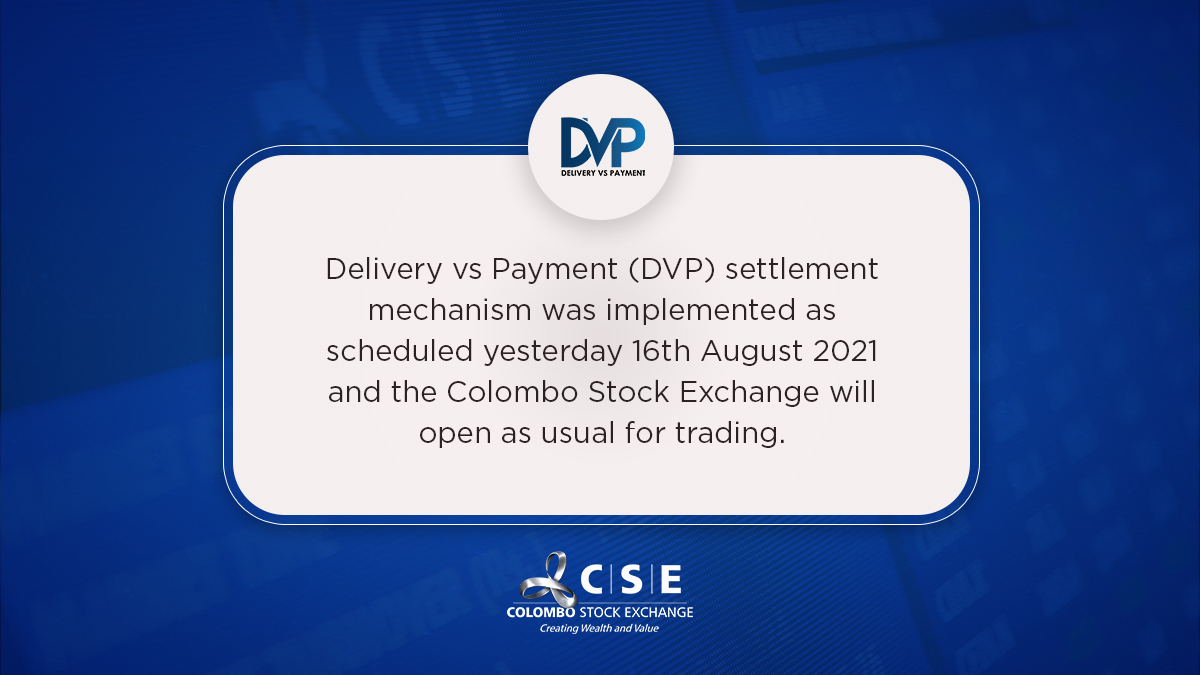
* Settlement: This is the final step where the actual transfer of ownership of assets (money, securities) occurs between the buyer and seller. In traditional systems, this can take a few days (e.g., T+2 or T+3 for stocks) due to the need for manual reconciliation, physical transfers, and the involvement of multiple intermediaries (banks, clearinghouses, depositories).
Clearing and Settlement in Bitcoin and Cryptocurrencies:
The core innovation of Bitcoin and most cryptocurrencies is their ability to perform clearing and settlement in a decentralized and often near-instantaneous manner, significantly reducing or eliminating the need for traditional intermediaries.
Here’s how it works:
* No Separate Clearinghouse: Unlike traditional finance, there isn’t a separate clearinghouse entity in most cryptocurrency networks. The blockchain itself, through its distributed ledger technology (DLT), acts as the combined clearing and settlement layer.
* Transaction Initiation (Clearing Equivalent):
* When you send Bitcoin (or any cryptocurrency) from one wallet to another, you are essentially broadcasting a “transaction” to the network.
* This transaction contains information like the sender’s address, the recipient’s address, the amount, and a digital signature (using your private key to prove ownership).
* Nodes on the network receive and verify this transaction. They check for sufficient funds and the validity of the digital signature, ensuring it’s a legitimate request and preventing “double-spending.” This verification process is akin to the “clearing” function, ensuring the terms are valid.
* Mining/Validation and Block Confirmation (Settlement Equivalent):
* Once verified, pending transactions are held in a “mempool” (memory pool).
* Miners (in Proof-of-Work systems like Bitcoin) or validators (in Proof-of-Stake systems) then gather these verified transactions into a “block.”
* They compete to add this new block to the blockchain by solving a complex cryptographic puzzle (mining) or by staking their crypto and being chosen to validate (Proof-of-Stake).
* Once a block is successfully added to the blockchain, the transactions within it are considered settled. The ownership data associated with the crypto wallets is immutably updated on the public ledger.
Key Differences and Relationships:
* Decentralization: The most significant difference is decentralization. Bitcoin and many cryptocurrencies achieve clearing and settlement without a central authority or trusted third party. The network of nodes collectively verifies and records transactions.
* Immutability and Transparency: Once a transaction is settled on the blockchain, it’s virtually impossible to alter or reverse. This immutability, coupled with the transparent nature of the public ledger, provides a high degree of finality.
* Speed: While traditional settlement can take days, cryptocurrency transactions often settle much faster – from minutes (for Bitcoin) to seconds (for some faster blockchains or Layer 2 solutions). The “instant settlement network layers” are designed to further enhance this speed.
* Cost: By cutting out intermediaries, cryptocurrency transactions can have lower fees compared to traditional wire transfers or cross-border payments, though network congestion can sometimes drive up transaction fees (gas fees on Ethereum, for example).
* Global Reach: Cryptocurrencies allow for peer-to-peer transactions across borders without the need for multiple banking relationships or foreign exchange conversions, simplifying international clearing and settlement.
In essence, Bitcoin and cryptocurrencies embody a new paradigm for clearing and settlement, leveraging distributed ledger technology to achieve these functions directly on the blockchain, bypassing many of the traditional financial intermediaries and processes. This is why concepts like “clearingandsettlement.btc” are relevant – they point to a future where domain names can directly facilitate and represent these decentralized financial operations.Video courtesy of CSOB
Video courtesy of CSOB